
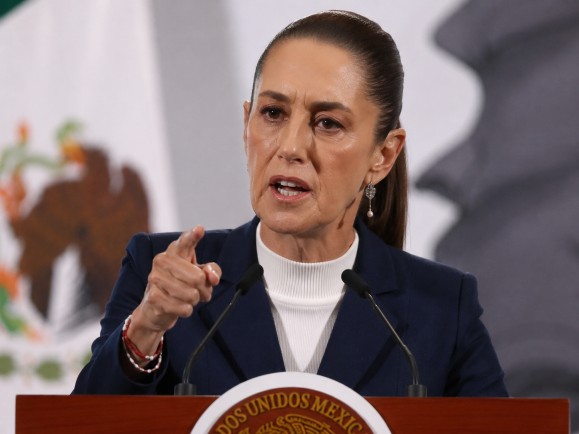
In the wake of a tragic incident involving the deaths of 17 Mexican citizens while in U.S. Immigration and Customs Enforcement (ICE) custody, Mexican President Claudia Sheinbaum has made a strong appeal for national unity. Sheinbaum has called on all political factions to come together, emphasizing that the protection of Mexican nationals abroad should transcend domestic political divisions.
The Mexican government is responding with a series of measures aimed at addressing the situation. These include advocating for international investigations, supporting legal actions in U.S. courts, and enhancing diplomatic efforts to safeguard the rights and safety of Mexican citizens overseas. President Sheinbaum’s call for a united front highlights the urgency of the issue and her belief that it warrants a collective, non-partisan approach.
Despite these efforts, opposition parties have not rallied behind Sheinbaum’s appeal. The Institutional Revolutionary Party (PRI) has expressed skepticism about the motivations behind the initiative, accusing it of being politically driven rather than a sincere attempt to foster national consensus. This response underscores the entrenched political polarization in Mexico, which persists even in matters concerning the welfare of its citizens abroad.
The refusal of opposition parties to support Sheinbaum’s call for unity further illustrates the deep-seated divisions within Mexican politics. While the administration is pushing for a coordinated response to protect its citizens, the opposition’s critique reflects ongoing skepticism and mistrust among political factions, making consensus elusive.
As the situation unfolds, the Mexican government continues to press forward with its proposed actions, aiming to ensure justice and protection for its nationals. However, the broader political landscape remains fraught with tension, highlighting the challenges of achieving national unity on critical international issues.