
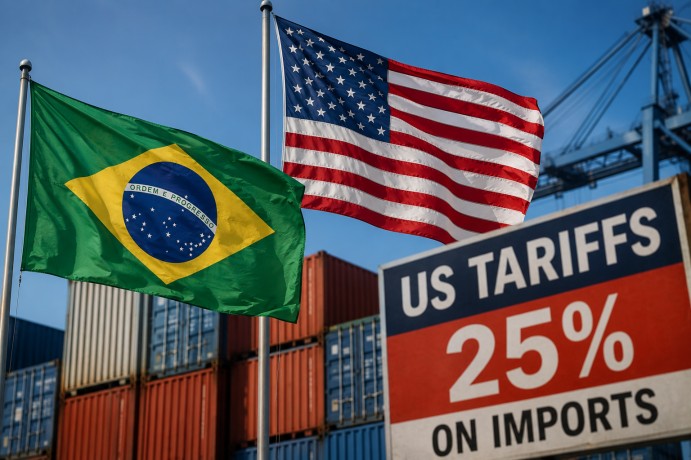
The United States’ decision to impose a 25% tariff on select Brazilian products has drawn sharp criticism from Brazil, which has labeled the move as unjustified. Set to take effect on July 22, the tariffs have led to a rejection of U.S. allegations regarding Brazil’s trade practices, with the Brazilian government firmly stating it does not engage in unfair trade activities.
While the new tariffs will target specific imports from Brazil, notable exemptions have been made for products such as coffee, beef, oranges, orange juice, certain oil and gas products, and aerospace components. This measure aims to prevent disruptions in the supply chain. The U.S. Trade Representative explained that the tariffs result from an investigation which concluded that Brazil engages in several unfair trade practices, including lax anti-corruption measures and unreasonable trade policies.
According to U.S. officials, these tariffs are intended to create a level playing field for American businesses and workers. Despite the imposition of these tariffs, the U.S. maintains that negotiations with Brazil are still on the table, leaving room for potential diplomatic solutions.
U.S. Secretary of State Marco Rubio has accused the administration of Brazilian President Luiz Inácio Lula da Silva of not negotiating in good faith. Rubio emphasized that Brazil’s economic policies have had adverse effects on both American and Brazilian interests, further complicating bilateral trade relations.
In response, Brazil continues to reject these accusations and stands firmly against the tariff measures. The disagreement highlights ongoing tensions between the two nations, as each side defends its economic policies and trade strategies.